Seoul Private Layover Tour from the Airport with a Local
Airport pickupAdmission includedPrivate
Eight hours from either terminal, timed around both your flight numbers — built for the ten-to-thirteen-hour transpacific stop.
From $199 per person
Nobody books a nine-hour stop in Seoul on purpose. It is a by-product of how Incheon is scheduled, and once you know which flow you are in you can predict the gap before the airline confirms it.
Incheon is a wave hub. Long-haul arrivals from North America and Europe land in clusters in the late afternoon and early evening, and the onward departures to Southeast Asia and Oceania leave in a bank late that night or the following morning. The gap between the two waves is not a delay; it is the design.
The practical consequence is that the most common extended connection here is not three hours or four. It is eight to twelve — which is precisely the band these tours are built for.
The classic long stop. A morning departure from the US west coast lands at Incheon in the late afternoon, and the onward flight to Bangkok, Ho Chi Minh City or Manila leaves the next morning. Gaps of ten to sixteen hours are routine.
What it leaves you: an evening, or an overnight. If you land at 16:00 and leave at 09:00, a city hotel and a morning tour beat sixteen hours in a terminal by a wide margin.
The kangaroo route via Seoul rather than the Gulf. Arrivals from London, Paris or Frankfurt reach Incheon in the late afternoon, with the onward leg to Sydney, Brisbane or Auckland departing that evening or the next morning.
What it leaves you: typically six to eleven hours. At the upper end that is a full palace-and-market afternoon; at the lower end, one place done properly.
Shorter onward sectors mean tighter, more frequent departures, and the connections here tend to be four to eight hours rather than overnight. It is the flow most likely to produce a gap that looks usable and is not.
What it leaves you: on the shorter end, the Incheon-side routes. On the longer end, the six-hour rail tour and nothing more ambitious.
Passengers connecting to Jeju or Busan through Gimpo face a second problem: the onward flight often leaves from a different airport on the far side of the city. That transfer alone eats two hours.
What it leaves you: less than the clock suggests. The airports and map page sets out the Gimpo transfer honestly before you plan anything around it.
Not a flight connection at all, but the same problem with a harder deadline. Ships calling at Incheon, Busan or Jeju give six to nine hours ashore, and the consequence of being late is watching your ship leave rather than rebooking a seat.
What it leaves you: a full day, with a guide who was waiting at the terminal before the ship berthed. The four cruise listings here all state an on-time return to the port as part of the fare, which no airport product does.
| Where you are coming from | Where you are going | Typical Incheon gap | What it leaves you |
|---|---|---|---|
| US west coast | Bangkok, Manila, Ho Chi Minh City | 10 to 16 hours | An evening, or an overnight and a morning |
| US east coast | Singapore, Jakarta, Hanoi | 8 to 13 hours | A full guided day |
| London, Paris, Frankfurt | Sydney, Brisbane, Auckland | 6 to 11 hours | An afternoon, or one place done properly |
| North America | Tokyo, Osaka, Shanghai | 4 to 8 hours | Incheon side, or the six-hour rail tour |
| Anywhere long-haul | Jeju or Busan via Gimpo | 6 to 10 hours | Less than it looks — the airport change costs two hours |
| A cruise ship | Back to the same berth | 6 to 9 hours | A full day, with a guaranteed return |
Match it to a tour built for that length, from a short Incheon-side run to a full guided day in the capital.
Yes, and it is usually free. Most airline booking engines let you pick a later onward flight from the same fare bucket, and many carriers price a stopover of under 24 hours identically to a short connection. If two itineraries cost the same and one gives you ten hours in Seoul rather than three, the choice makes itself.
Check the fare rules before you commit, and read the timing rules so you know what the longer gap is actually worth in usable hours.
Eight hours from either terminal, timed around both your flight numbers — built for the ten-to-thirteen-hour transpacific stop.
From $199 per person
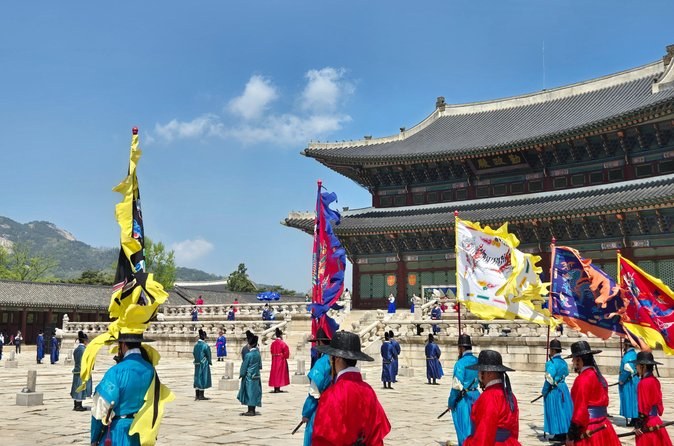
Seven to eight hours with entry fees and transfers paid, which fits the nine-to-eleven-hour European-to-Australia gap.
From $240 per person

For ships rather than aircraft: met at Incheon Cruise Terminal before the vessel berths, with a stated return before sailing.
From $444 per group of up to 6
Now work out what your gap is worth: the timing rules do the arithmetic, layovers of six hours or more show what each band buys, and Seoul Layover Tours lists every departure.