Seoul Layover Timing Rules
Hours, fares and access verified by the Seoul Layover Tours team — last checked 2026-08-28
A layover is a subtraction problem. Take your gap between flights, take
away what the airport and the road want, and whatever is left is Seoul. This page does
that sum with real numbers so you can do it before you book anything.
Can you leave the airport at all?
Two answers, and only one of them involves paperwork.
Staying airside: nothing required. Most travellers transit visa-free
for under 24 hours as long as they hold an onward ticket and stay in the transit area.
Going into the city: that is an entry to Korea, so you clear
passport control and you need permission to do it — a Korean visa, or a K-ETA.
The good news for 2026 is a temporary exemption: nationals of visa-waiver countries may
enter without applying for a K-ETA until 31 December 2026. Check your
own passport on the official K-ETA site, because the exemption carries a date and has
been extended more than once already.
What you need to clear immigration
| Your situation | What you need | Where to confirm it |
|---|
| Staying inside the transit area, under 24 hours | Onward ticket. Nothing else | Your airline |
| Leaving the terminal, visa-waiver nationality | Currently nothing, under the exemption running to 31 December 2026 | The official K-ETA site |
| Leaving the terminal, visa-waiver nationality, after that date | A K-ETA, applied for online in advance | The official K-ETA site |
| Leaving the terminal, everyone else | A Korean short-stay visa | Your nearest Korean embassy or consulate |
Apply early if you need either document. Neither is expensive, and neither can be
fixed at the arrivals desk on the day.
The four numbers that decide your layover
Every honest layover plan is built from these, and they do not change much:
1. Immigration and the walk out — about 1 hour. Longer at the
morning and evening banks when several long-haul flights land together, shorter if the
automated gates are open to you.
2. The run into Seoul — about 1 hour. Sixty kilometres by road
in normal traffic. The Airport Railroad express does it to Seoul Station in 43 minutes
and the all-stop service in about an hour.
3. The run back — about 1 hour. Same distance, and the one
people forget when they are enjoying themselves.
4. The margin before your onward flight — 2 hours minimum.
Three if you are checking a bag or your ticket is a separate booking.
That is roughly five hours of overhead. Everything below is your gap
minus five.
Working out your usable hours
The sum, run for the connection lengths people actually have:
| Your gap | Usable hours in the city | What that realistically means |
|---|
| 6 hours | About 1 | Incheon side only. Chinatown or Songdo, 20 minutes away |
| 7 hours | About 2 | One place properly, and it should be close to the station |
| 8 hours | 2 to 3 | A palace and one neighbourhood next to it |
| 9 hours | About 4 | Palace, hanok lanes and a market, without rushing |
| 10 to 12 hours | 5 to 7 | Add the tower, a real lunch, or a second palace |
| Over 16 hours | A night | A city hotel, and the next morning as well |
Notice what this does to the marketing. A tour advertised as "8 hours" needs a gap of
roughly thirteen, not eight — the duration is the tour, not your connection. Every
listing on Seoul Layover Tours states its own hours, and the good operators will tell you
plainly if your gap is too short.
Know your number?
Match your usable hours to a tour built for them, from a one-hour Incheon-side run to a full guided day in the capital.
The safe margin back
Work backwards from your departure, not forwards from your landing. In order:
- Fix your onward departure time, and subtract two hours. That is your
hard deadline at the terminal kerb.
- Subtract another hour for the drive or the train from the city.
- Subtract 20 minutes if you land at one terminal and leave from the
other — they are 15 kilometres apart.
- What is left is when you have to start heading back. Tell your guide
that time, not your flight time.
Every operator here asks for your flight numbers precisely so they can do this for
you. Give them both, inbound and outbound.
Luggage, and whether it follows you
One ticket, both flights: your hold bags are almost always tagged
through to the final airport. You walk out with hand luggage and lose nothing.
Two separate tickets: you collect the bag, clear customs and check
in again. That is an hour out of the middle of your day — subtract it before you
choose a tour length, not after.
Either way: both terminals have staffed left-luggage counters and
lockers, and every private tour here carries hand baggage in the vehicle. A large case
on the Airport Railroad at rush hour is a fight you do not need.
The Tuesday problem, and how the tours already solve it
Gyeongbokgung Palace closes every Tuesday. It is the
single stop almost every itinerary here is built around, so a Tuesday connection changes
the shape of the day.
It is already handled. Two of these listings state their own swap: one moves to
Changdeokgung, the other to Deoksugung, both a short drive from the same gate. And
because Changdeokgung takes its closed day on Monday instead, there is no day of the
week when every palace is shut. Tell your guide which day you land and the itinerary
arrives already adjusted.
Tours sized to a real connection
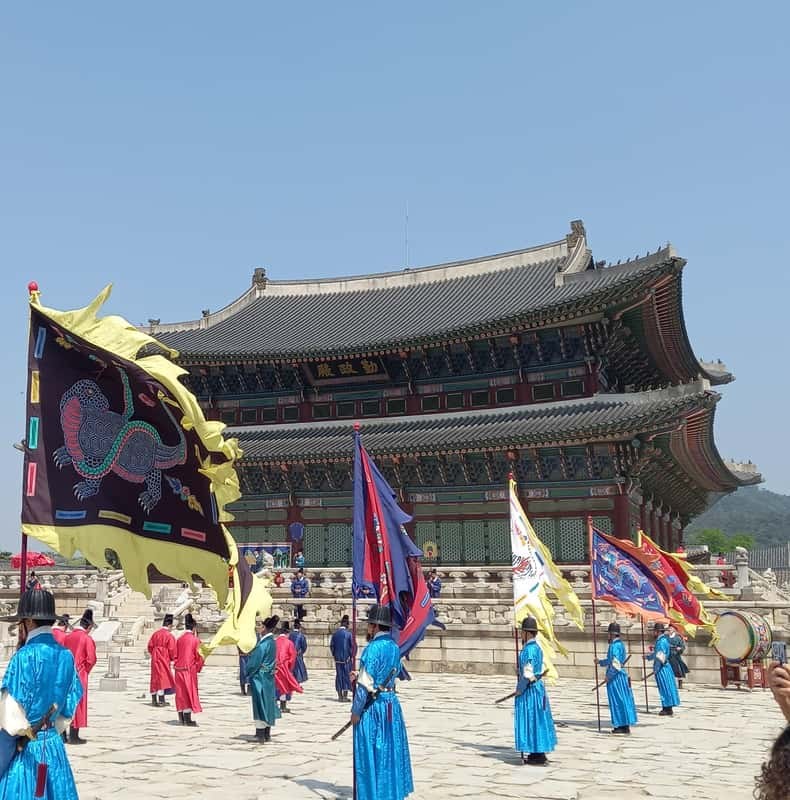
★ 5.023 reviews6 hours
Airport pickupAdmission includedBy train
Six hours door to door on the Airport Railroad — the shortest guided option here, and the one that fits an eight-hour gap with margin left over.
From $254 per group
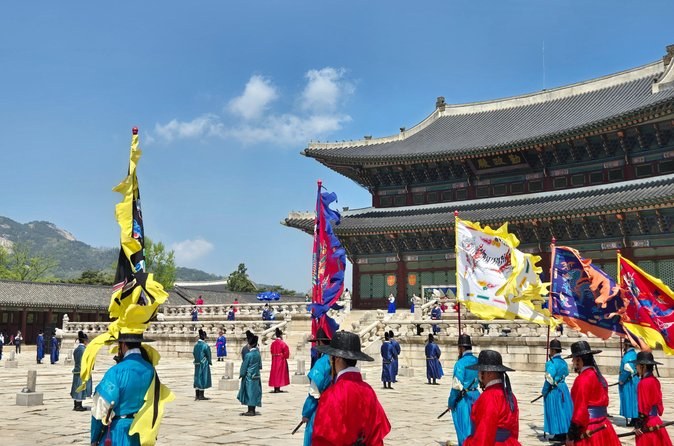
★ 4.984 reviews7 to 8 hours
Airport pickupAdmission includedPrivate
Seven to eight hours with entry fees paid and a name sign at arrivals. Built for the nine-to-eleven-hour connections that make up most of Incheon's long stops.
From $240 per person
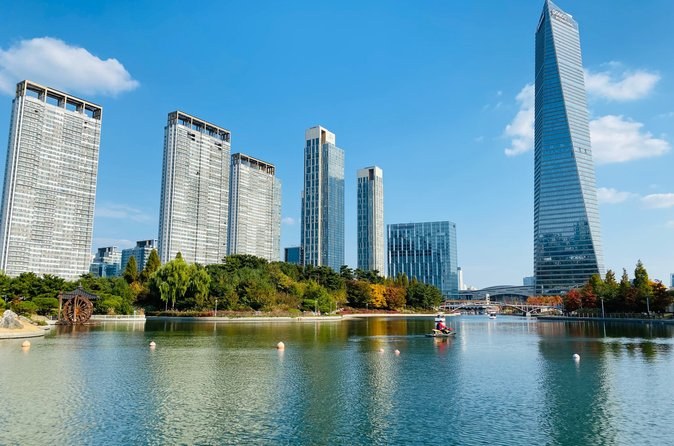
★ 4.948 reviews8 hours
Airport pickupAdmission includedPrivate
Stays on the Incheon side, twenty minutes from the terminal instead of an hour. The honest answer when the gap is six or seven hours.
From $190 per person