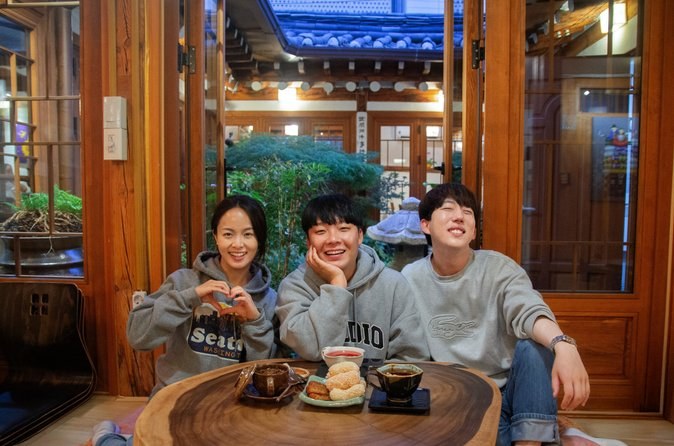
Flexible Layover Private Guided Tour in Seoul(pick up Incheon)
Airport pickupAdmission includedPrivate
Nine hours and six stops, with the route agreed on the day — which is what you want when the weather decides the order.
From $240 per person
On a holiday the weather decides what you wear. On a layover it decides how many places you reach, because the palace closes an hour earlier in winter and the light goes with it. This page starts with that consequence and then goes month by month, so you can size a Seoul Layover guided tours booking to the season you are actually flying in.
Three things change with the season, and only one of them is comfort.
Closing time moves by 90 minutes. Gyeongbokgung Palace shuts at 17:00 in January, February, November and December, at 18:00 in spring and autumn and at 18:30 from June to August, with last entry an hour earlier in every case. An evening arrival that works in July is useless in December.
Daylight swings by more than five hours. The December solstice on the 22nd is over five hours shorter than the June one. Two of the stops here — the hanok lanes and the tower view — are worth much less in the dark.
July and August are genuinely wet. 415 mm of rain in July and 350 mm in August, with about four hours of daily sun at the low point. That does not cancel a layover; it changes which stops belong in it.
Coldest month. Highs reach about 2 °C and nights fall to −6 °C, with only 15 mm of rain. The palace closes at 17:00 and last entry is 16:00. Plan an early start: the useful daylight is gone by mid-afternoon.
Still cold, but moving. Highs of about 5 °C, lows near −4 °C and 30 mm of rain. Palace hours stay at 09:00 to 17:00. The light lasts noticeably longer by the end of the month than at the start.
The turn. Highs reach about 11 °C and the palace switches to an 18:00 close, which adds an hour to the usable end of the day. Rain stays low at 35 mm. A nine-hour connection starts to feel unhurried.
One of the two best months. Highs of about 18 °C, seven hours of sun a day and 75 mm of rain. Cherry blossom runs through the first half of the month and the palace grounds are busy for it. Nothing needs planning around.
The other best month. Highs near 23 °C, seven hours of daily sun and 105 mm of rain. Long light means an evening connection still reaches the markets. Walking between the palace and the hanok lanes is comfortable all day.
Warm and turning humid, with highs of about 27 °C and 130 mm of rain. The palace runs its longest hours, to 18:30. The rains have not properly arrived yet, which makes early June better than late.
The wettest month by a wide margin: 415 mm of rain and only about four hours of sun a day. Highs sit near 29 °C with high humidity. Weight the day towards the museum and the covered markets rather than open courtyards.
Hottest and still wet — highs of about 30 °C and 350 mm of rain. Typhoons can reach the city from July into early October. The palace still closes at 18:30, so an evening arrival keeps its options.
The rains ease and the humidity drops. Highs near 26 °C and 140 mm of rain, with the palace back to an 18:00 close. Late September is one of the most reliable stretches of the year for a layover.
Autumn colour, and the third strong month. Highs of about 20 °C and only 50 mm of rain. Ginkgo and maple turn through the palace grounds and Bukchon. Cool enough to walk all afternoon without stopping.
Cooling fast. Highs near 12 °C, 50 mm of rain, and the palace back to a 17:00 close from the start of the month. Colour holds into the first week or two. Bring a coat and start early.
Cold, dry and short. Highs around 4 °C, lows near −4 °C and just 25 mm of rain. The solstice on 22 December is the shortest day of the year, over five hours shorter than the June solstice. Pick two stops rather than four.
| Season | Temperature | Rain | What it means for a layover |
|---|---|---|---|
| Spring, Mar to May | 11 to 23 °C | 35 to 105 mm | The best of the year. Long light, dry, and the palace open until 18:00 |
| Summer, Jun to Aug | 27 to 30 °C | 130 to 415 mm | Longest opening hours, heaviest rain. Weight the day indoors |
| Autumn, Sep to Nov | 12 to 26 °C | 50 to 140 mm | Dry, cool and coloured. October is the pick |
| Winter, Dec to Feb | 2 to 5 °C | 15 to 30 mm | Dry but short and cold. Two stops, not four, and start early |
If you can choose your connection date, take late April, May or October. If you cannot, the season changes which tour suits rather than whether one does.
Morning. The palace opens at 09:00 year-round and the first hour is the quietest it gets. A connection landing before 07:00 is the best-shaped layover available.
Early afternoon. The changing of the guard runs at the main gate and the markets are fully open. This is the standard shape of most tours here.
Evening. From June to August the palace is still open at 18:00 and the tower view is worth the mountain road. From November to February there is no evening — plan for a market rather than a monument.
Nine hours and six stops, with the route agreed on the day — which is what you want when the weather decides the order.
From $240 per person
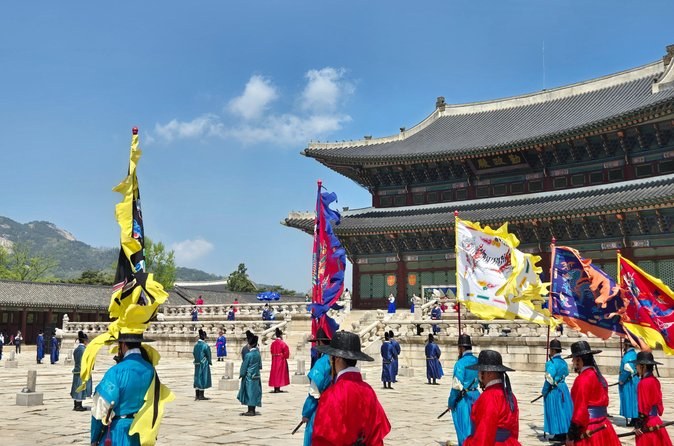
Palace, hanok lanes, Insadong and a market, with the National Folk Museum inside the same walls if the rain sets in.
From $240 per person
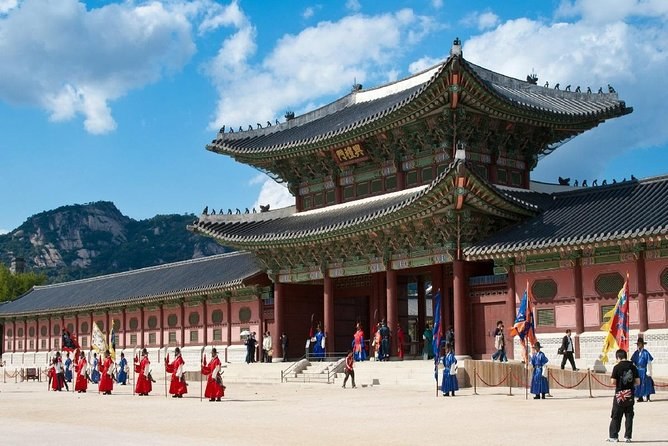
A full guided day with a mini-bus between every stop, which matters more in January and July than in May.
From $68 per person
Season settled? The timing rules work out your usable hours, things to do on a Seoul layover lists what is open when, and Seoul Layover Tours carries every departure.