Short answer. The fear is missing your onward flight, so deal with it first: work backwards from your departure, not forwards from your landing. Two hours at the terminal, one hour back from the city, and start heading back at that time whatever you are enjoying. Everything else about a first Seoul layover is easier than you expect.
The only thing you are actually worried about
Nobody's first question about a layover is which palace. It is whether they will make
the connection. So here is the answer before anything else: fix your departure time,
subtract two hours for the terminal, subtract one more for the road, and that is when you
turn around. Tell your guide that time rather than your flight time, and the day looks
after itself.
Every operator here asks for both flight numbers so they can do this sum for you. It is
not a formality — it is the whole service.
What happens when you land
- Follow the arrival signs to immigration. Budget an hour; it can be
twenty minutes and it can be more when several long-haul flights land together.
- Collect a bag only if your tickets are separate. On a single ticket your
hold luggage goes through without you.
- Walk into the arrivals hall. Guides wait landside, which is why a slow
queue costs you sightseeing rather than the booking.
- Find your guide. The better listings name a specific landmark — a
convenience store on the arrivals floor, a sign inside the terminal — rather than
just "arrivals".
Do you need a visa?
To sit airside, no: most nationalities transit visa-free under 24 hours with an onward
ticket. To leave the terminal, you need a Korean visa or a K-ETA — and for
visa-waiver nationals the K-ETA requirement is currently waived until 31 December 2026.
Check your own passport on the official K-ETA site rather than on a forum.
The timing rules page lists the four situations and what each
one requires.
What the money looks like
- The currency is the Korean won. Prices are quoted in thousands, so a bowl of noodles
is around 6,000 to 9,000.
- Cards work almost everywhere, including taxis and the airport train.
- Market stalls are easier with a little cash. Withdraw a modest amount at the airport
rather than changing money before you fly.
- Tipping is not expected anywhere, including on these tours.
- Two listings carry on-the-day surcharges quoted in won; both state them on their own
page.
How much Korean do you need?
None on a guided day. Every tour here is run in English, and four also offer Chinese.
Signage at the airport, on the Airport Railroad and at the palaces is bilingual
throughout.
If you are going in alone, the metro is signed and announced in English and taxi
drivers use translation apps as a matter of course.
What to wear, and what to carry
Shoes you can walk in. The itineraries here average four to five hours on your feet,
much of it on the palace's gravel and stone. Layers, because Seoul swings from below
freezing in January to nearly 30 °C in August —
the month-by-month page has the numbers.
Carry hand luggage only if you can. Every private tour keeps bags in the vehicle, and
both terminals have left-luggage counters if you would rather travel light.
Is Seoul a good first stopover city?
Unusually good, and for reasons that have nothing to do with the sights. The airport
is consistently among the best-run in the world and its signage is bilingual throughout.
The train into the city is a single line with two services and no changes. The main
sights sit within a few streets of each other rather than scattered across a metropolitan
area. And the one stop everybody wants — the palace — is open-air, which
means no timed entry and no interior queue.
Compare that with a first layover in a city where the airport is an hour from a
station, the sights are forty minutes apart and the headline attraction sells timed
tickets three weeks ahead. Seoul is a forgiving place to try this for the first time.
The two mistakes first-timers make
Reading the tour's duration as their layover. An eight-hour tour needs
a thirteen-hour connection. The tour clock starts when you meet your guide and stops when
you are back at the kerb; your clock started when the wheels touched down.
Booking a six-hour gap into central Seoul. The overhead alone is about
five hours. Six-hour connections belong on the Incheon side, which
the short-layover page covers, or airside with the airport's
own free tour.
If your inbound is running late, message the operator immediately. They will shorten the day rather than cancel it, and every
guided tour layover Seoul here refunds in full up to 24 hours ahead if it truly will not work.
Getting back out through the airport
The return is the half nobody rehearses, and it is the simpler half. You are an
ordinary departing passenger: check in if your bags were not tagged through, clear
security, clear departure immigration, walk to the gate. Two hours covers it comfortably
at Incheon, which is a well-signed and unusually efficient airport.
Two things to watch. If you land at one terminal and depart from the other, add twenty
minutes for the train or the shuttle between them. And if your tickets are separate, you
are checking in from scratch, so make it three hours rather than two.
If your layover is shorter than you hoped
It happens: the inbound runs late, or the connection was always tighter than it looked.
Neither is a disaster and neither means sitting in a departure lounge feeling cheated.
Message the operator as soon as you know. Every guide here would rather run a
shortened day than a cancelled one, and several reshape the route on the spot. If it
truly will not work, cancel more than 24 hours out and pay nothing, or take the airport's
own free transit tour instead — the short-layover page
covers where the desks are.
A first layover, hour by hour
| Time from landing | What is happening |
|---|
| 0:00 | Wheels down. Walk to immigration |
| 1:00 | Through the hall, meeting your guide |
| 2:00 | Arriving in central Seoul |
| 2:00–3:30 | Gyeongbokgung Palace, with entry already paid |
| 3:30–4:15 | Bukchon Hanok Village, five minutes' walk away |
| 4:15–5:15 | Insadong, or lunch standing up at Gwangjang Market |
| 5:15–6:15 | Back to the airport |
| 6:15 | At the terminal, two hours before departure |
That is a nine-hour connection, comfortably. Add two hours and you get the tower or a
second market; take two away and you should be looking at Incheon instead.
Good first Seoul layovers
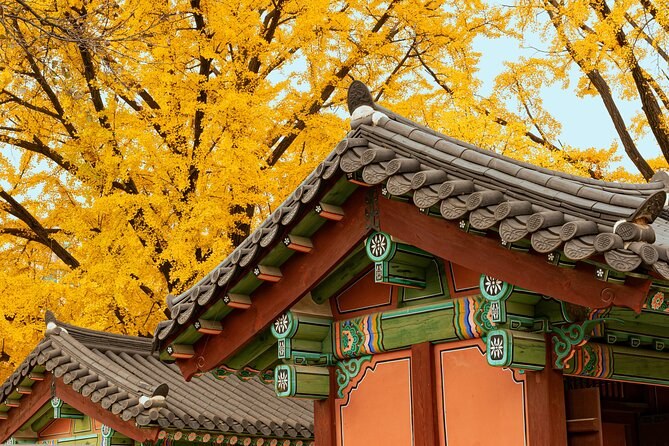
★ 5.020 reviews7 to 8 hours
Airport pickupAdmission includedPrivate
Meets at a named convenience store on the arrivals floor, which removes the part first-timers worry about most, and carries the lowest private fare here.
From $185 per person
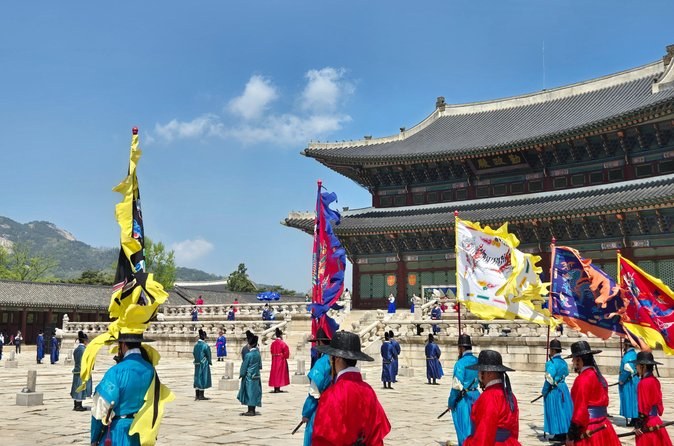
★ 4.984 reviews7 to 8 hours
Airport pickupAdmission includedPrivate
The most-reviewed airport-door day, with entry fees and both transfers paid so nothing else is due once you land.
From $240 per person
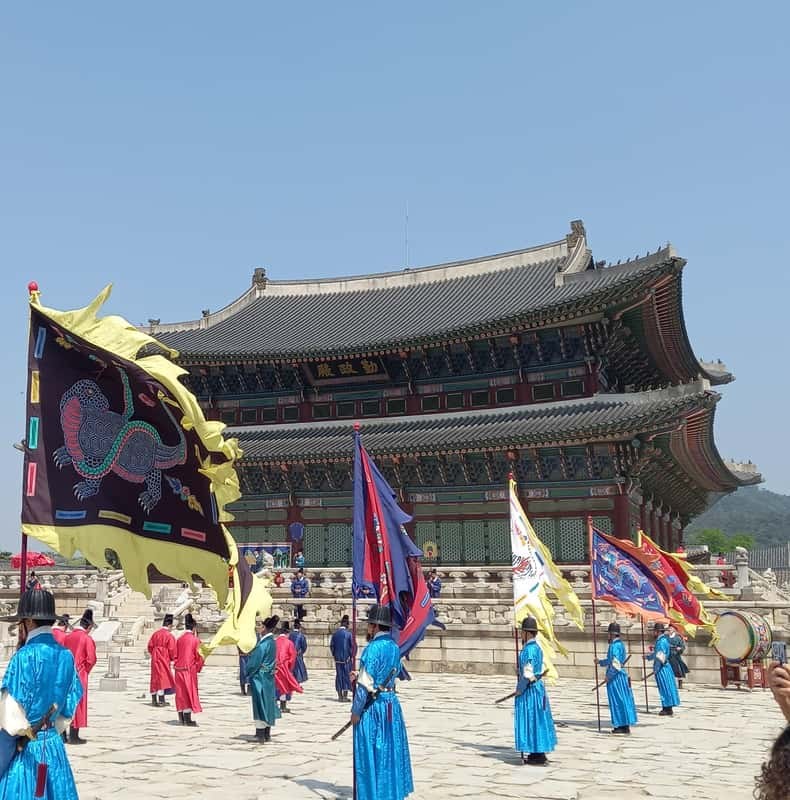
★ 5.023 reviews6 hours
Airport pickupAdmission includedBy train
Six hours door to door with a guide who rides the airport train beside you and walks you back to the platform at the end.
From $254 per group