Seoul Layover Tour: Seoul Highlights with ICN Airport Pick-up
Airport pickupAdmission includedBy train
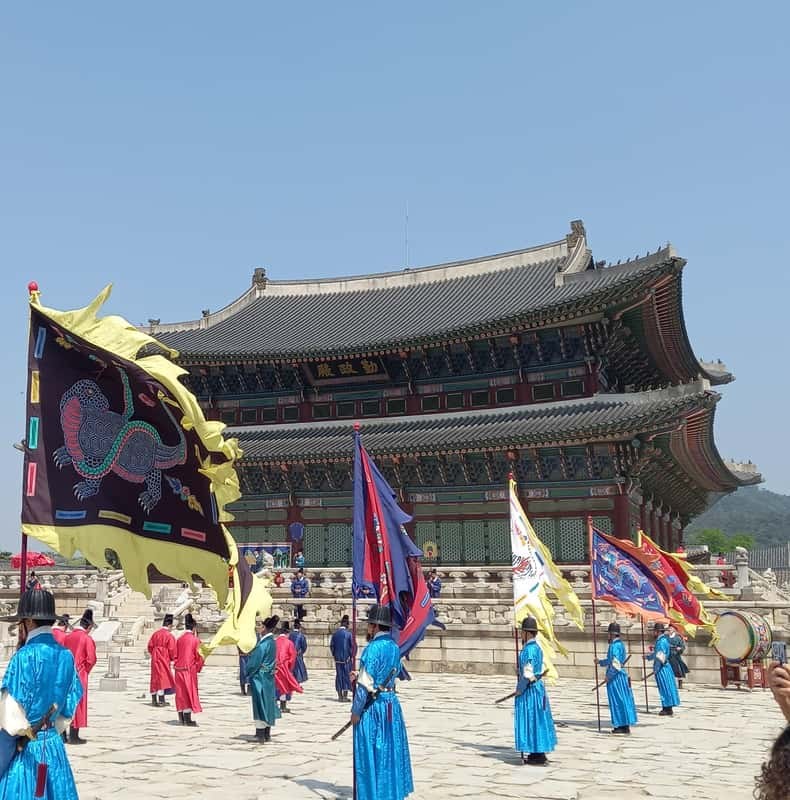
The three-usable-hour route done properly: two hours inside the palace, and no traffic between you and the terminal.
From $254 per group
Each route below is written in usable hours — time actually in the city — not in connection length. To convert, add about five hours: one for immigration, one each way for the transfer, and two before your onward flight.
So a route described as five usable hours needs a ten-hour connection. That conversion is the whole reason people misjudge a Seoul layover, and the timing rules page does it properly.
Not go to Seoul. One usable hour means a six or seven-hour connection, and the capital is sixty kilometres away in each direction.
What it does buy is the Incheon side. Chinatown in the old open-port quarter is twenty minutes from the terminal: a painted gate, restaurants dating to the 1880s, and Jayu Park on the hill above. That is a real place with real history, and it is reachable. The short-layover page sets out the alternatives.
Needs a connection of about seven hours. One operator sells exactly this shape as an eight-hour day with Songdo and the Wolmido sea train added.
Needs about eight hours. This is the shape the six-hour rail tour is built around, and it is the smallest version of a Seoul layover that feels like one.
Needs about ten hours, and it is the band most of these tours are actually sized for. Four stops, nothing rushed, and a proper meal in the middle.
Needs about twelve hours. The nine-hour private day is built for this, and it is the only route here that reaches the tower.
Different deadline, same arithmetic, and a genuinely different set of products. Ships calling at Incheon Cruise Terminal give six to nine hours ashore, and the terminal is a third address entirely — on the mainland at Yeonsu-gu, about forty minutes from the airport and an hour from central Seoul.
The excursions written for this all state something no airport tour does: the meeting time follows your ship's berthing rather than the time printed on the voucher, and the fare carries a stated on-time return to the port. That is the right guarantee to buy when being late means watching your ship leave rather than rebooking a seat.
Two things change in the itineraries above. The transfer from the cruise terminal is about an hour rather than the airport's sixty kilometres, and there is no departure check-in to allow for at the end — you simply need to be back aboard. In practice a seven-hour port call buys about as much as a ten-hour flight connection.
Past sixteen hours the calculation changes entirely. A city hotel costs less than most of these fares, and it converts a wait into a stopover: dinner in Myeongdong, a night in a bed, and a full guided day before you fly.
It also unlocks the small-group palace day, which takes in Gyeongbokgung and UNESCO-listed Changdeokgung with hotel pickup — unusable on a same-day connection, and the best value here once you are staying in the city.
| Usable hours | Connection needed | Stops reached | What the last hour bought |
|---|---|---|---|
| 1 | About 6 hours | Incheon Chinatown | The fact of having left the airport |
| 2 | About 7 hours | Chinatown and Jayu Park | A second place, still on the island side |
| 3 | About 8 hours | Palace and Bukchon | Central Seoul becomes possible |
| 5 | About 10 hours | Add Insadong and a market | Lunch, and an unhurried palace |
| 7 | About 12 hours | Add a temple and the tower | The view, and the evening |
| A night | Over 16 hours | Two palaces the next morning | A bed, and the 09:00 opening |
Worth knowing, because it is an hour of your day in each direction and nobody describes it. The airport sits on Yeongjong Island, so the road out crosses a long bridge over the estuary before it reaches the mainland — on a clear day that is the best view of the trip that nobody advertises.
After that it is expressway through Incheon's outskirts and into western Seoul, past Gimpo airport and along the Han River for the last stretch. The train tells a different story: underground for much of it, then above ground through Gimpo and Hongik University before Seoul Station.
Neither is scenic in the way a countryside transfer is, and both are shorter than the distance suggests. What they are is predictable, which on a connection matters more.
Substantially, and the standard itinerary stops being the right one. A palace that closes at 17:00 in winter or 18:30 in summer is unreachable on a 19:00 landing whatever your gap.
The evening version runs the other way round: a market for food, then the lit riverside or the tower. Gwangjang and Myeongdong are at their best after dark, and one listing here ends deliberately at Banpo Hangang Park on the river for exactly that reason. An evening layover is not a lesser day; it is a different one.
The month-by-month page sets out when the light runs out, which between November and February is early enough to reshape any afternoon arrival.
More than the count. The palace opens at 09:00 and the first hour is the quietest it gets all day, so it goes first whenever your landing time allows. The markets stay open late and sit close to the road back, so they go last.
An itinerary that starts at a market and ends at the palace is losing you the palace's best hour and risking its closing time, which moves between 17:00 and 18:30 with the season. On the private tours you can simply ask for the order you want.
Yes, and on the longer routes you should, because a market lunch is one of the better things Seoul does and it costs almost nothing in time if you pick the right kind.
Standing at a stall in Gwangjang Market, a full plate of mung-bean pancake or knife-cut noodles takes about twenty minutes and a few thousand won. A sit-down Korean barbecue takes an hour at the table plus the wait, which on a five-usable-hour day is an entire stop surrendered. That is the whole decision.
Lunch is an exclusion on almost every listing here, which reads like a gap and behaves like a freedom: you choose, and nobody has routed your day through a restaurant that pays commission. On a three-usable-hour route, skip it and eat airside afterwards.
Something always slips — a late inbound, a slow queue, traffic on the expressway. Cut in this order, and the day survives.
More than feels necessary, and the slack belongs at the end rather than spread through the day. Every route above is written to a start-back time, not to a finish time, and that is deliberate.
The reason is that the two variables which actually move are both at the front and the back. Immigration can take twenty minutes or ninety depending on how many long-haul flights landed with yours. The expressway can add half an hour in rush hour. Neither touches the middle of the day, where you are on foot between stops that are five minutes apart.
So build the day as a fixed core with a padded return: palace, lanes, market, all of which run to their own predictable clock, then an hour for the transfer and two at the terminal. If the front end runs late you cut the last stop, which costs you a market rather than a flight. If it runs early you gain a stop. A route with the slack in the middle gives you neither — you simply arrive at the palace with time you cannot spend.
All of them, slightly, and none of them fatally. Gyeongbokgung closes on Tuesdays, so the anchor stop moves to Changdeokgung or Deoksugung — both a short drive from the same gate, and both operators who publish a swap say which they use.
Changdeokgung takes its own closed day on Monday, so there is no day of the week when every palace in Seoul is shut. Tell the operator your date and the itinerary arrives already adjusted.
The three-usable-hour route done properly: two hours inside the palace, and no traffic between you and the terminal.
From $254 per group
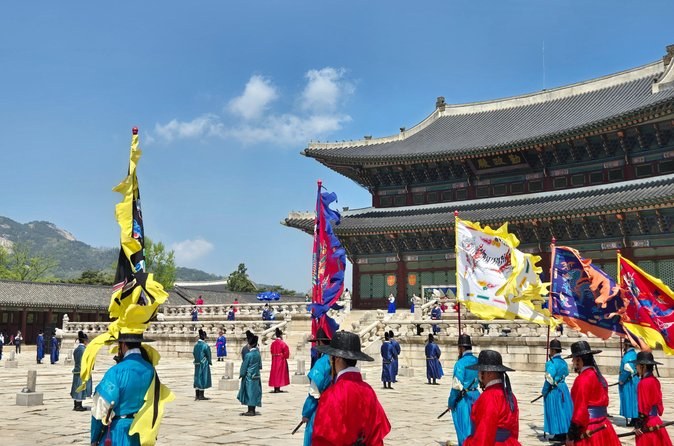
The five-hour shape, with entry fees and both transfers paid and four stops across seven to eight hours.
From $240 per person
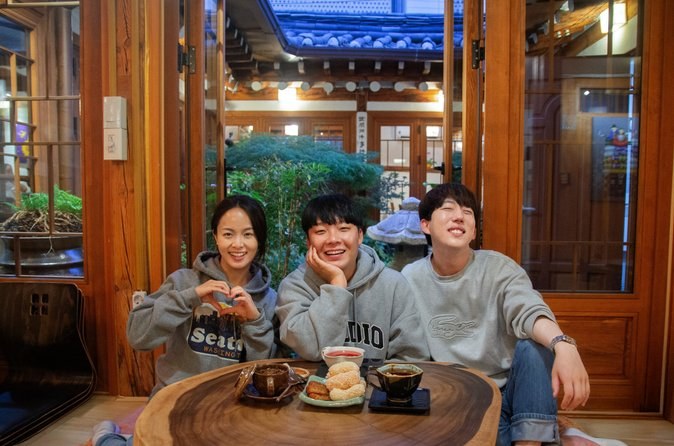
The seven-hour shape, and the only route here that reaches N Seoul Tower as well as the palace and the market.
From $240 per person
Convert your own connection into usable hours on the timing rules page, then match it to a departure on Seoul Layover Tours.