Seoul Layover Tour: Seoul Highlights with ICN Airport Pick-up
Airport pickupAdmission includedBy train
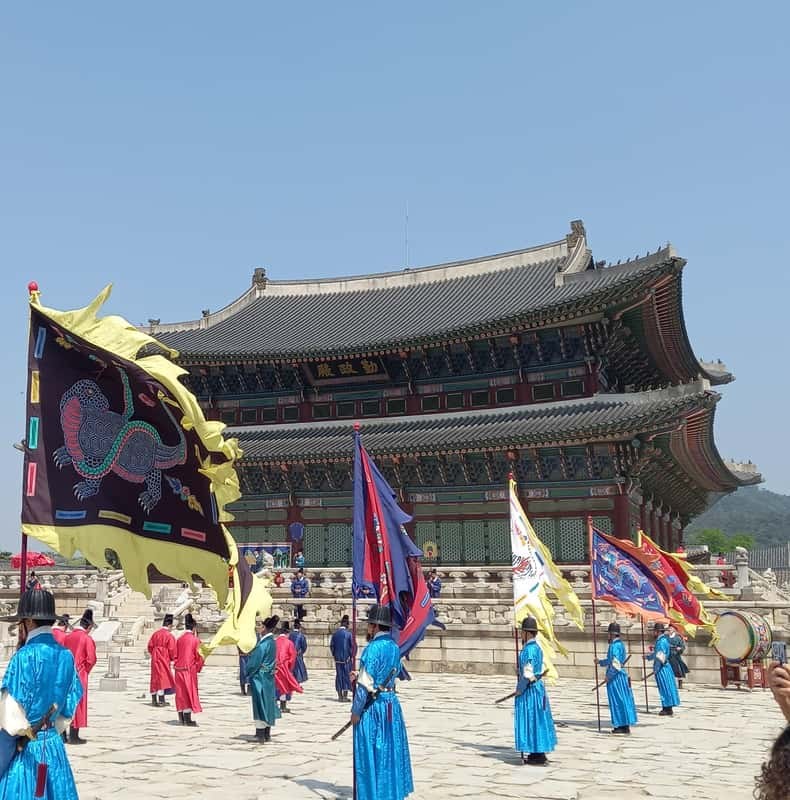
The winter answer: six hours, two of them inside the palace during opening hours, and no traffic between you and the terminal.
From $254 per group
On a holiday the weather decides what you wear. On a connection it decides how many places you reach, because two of the three variables are not about comfort at all.
The palace's closing time moves by ninety minutes across the year. Daylight swings by over five hours between the solstices. Only the third variable — rain and heat — is about how pleasant the day is, and it is the least consequential of the three.
Gyeongbokgung Palace closes at 17:00 from November to February, at 18:00 in spring and autumn, and at 18:30 from June to August. Last entry is an hour before closing in every case.
That is the single scheduling fact of a Seoul layover. An evening arrival that supports a full afternoon in July supports nothing at all in December, because by the time you have cleared immigration and driven in, the gate is shut.
The December solstice on the 22nd is over five hours shorter than the June one. Two of the standard stops lose most of their value in the dark: the hanok lanes of Bukchon, which are a view, and N Seoul Tower, which is entirely a view.
The markets do not care. Gwangjang, Namdaemun and Myeongdong are at their best after dark, which is why a winter layover should be weighted towards food and away from scenery.
The best stretch of the year, and it improves month by month. March turns: highs reach about 11 °C and the palace switches to an 18:00 close, which adds a usable hour to the end of the day. April brings about 18 °C, seven hours of daily sun and cherry blossom through the palace grounds in the first half of the month. May reaches 23 °C with long light.
Rain stays modest at 35 to 105 mm. Nothing about a spring layover needs planning around, which is exactly what you want when the day is measured in hours.
The longest opening hours and the heaviest rain, in the same season. June is warm at about 27 °C with 130 mm of rain and the palace open to 18:30 — early June is materially better than late.
July is the wettest month by a wide margin: 415 mm and about four hours of daily sun. August is the hottest at about 30 °C with 350 mm. Typhoons can reach the city from July into early October, though Seoul is less exposed than the southern coast.
The rains ease through September and the humidity drops with them: about 26 °C and 140 mm, with the palace back to an 18:00 close. Late September is one of the most reliable windows of the year.
October is the pick. Highs around 20 °C, only 50 mm of rain, and ginkgo and maple turning through the palace grounds and Bukchon. November cools fast to about 12 °C and the palace reverts to 17:00 from the first of the month, though the colour holds into the first week or two.
Cold, dry and short. December highs sit around 4 °C with just 25 mm of rain; January is the coldest at about 2 °C with nights down to −6 °C; February begins to lift toward 5 °C.
The rain figures are the lowest of the year, which surprises people — a winter layover is usually bright. What it is not is long. With a 17:00 close and a 16:00 last entry, pick two stops rather than four and start as early as your flight allows.
| Month | High | Rain | Palace closes | Verdict for a layover |
|---|---|---|---|---|
| January | 2 °C | 15 mm | 17:00 | Bright and very short. Two stops |
| February | 5 °C | 30 mm | 17:00 | Cold, lengthening. Two stops |
| March | 11 °C | 35 mm | 18:00 | The turn. An extra usable hour |
| April | 18 °C | 75 mm | 18:00 | Excellent. Blossom in the first half |
| May | 23 °C | 105 mm | 18:00 | The best month of the year |
| June | 27 °C | 130 mm | 18:30 | Long hours. Early June beats late |
| July | 29 °C | 415 mm | 18:30 | Wettest. Weight the day indoors |
| August | 30 °C | 350 mm | 18:30 | Hot and wet, but open latest |
| September | 26 °C | 140 mm | 18:00 | Improving fast. Late September is strong |
| October | 20 °C | 50 mm | 18:00 | The other best month. Autumn colour |
| November | 12 °C | 50 mm | 17:00 | Cooling. Colour early in the month |
| December | 4 °C | 25 mm | 17:00 | Dry, cold, shortest. Start early |
Yes, in three specific ways.
In winter, take the shortest efficient option. The six-hour rail tour loses nothing to darkness because its two hours are inside the palace during opening hours, and it removes the traffic risk on a day with no light to spare.
In summer, take a private car with a route you can change. When 415 mm of rain falls in a month, the ability to swap an open courtyard for a covered market on the day is worth more than an extra stop.
In spring and autumn, take the longest day your connection supports. These are the months when a nine-hour tour reaching the tower actually pays off.
Less than for a holiday, and the list changes more by season than the temperature alone suggests. In every month: shoes you can walk four to five hours in, because the palace grounds are gravel and stone and the itineraries here are almost entirely on foot once you arrive.
From November to February, a proper coat rather than a jacket — January nights reach −6 °C and the palace courtyards are exposed. From June to August, something that dries: 415 mm of rain in July arrives in bursts rather than drizzle, and the humidity makes a long afternoon harder work than 29 °C sounds.
In April, May, September and October, essentially nothing special. That is part of what makes those months the ones to hope for.
Not the distance, but sometimes the clock. Sixty kilometres of expressway behaves differently in a July downpour than on a dry October morning, and the two big holiday weeks fill the roads out of the city in one direction.
The Airport Railroad is the season-proof option: 43 minutes on the express regardless of weather or traffic. In winter, when there is no light to waste, and in July, when the expressway slows, that reliability is worth more than the flexibility of a car. The timing rules build the margin either way.
No month is a write-off, which is not true of every destination. July is the hardest: heaviest rain, least sun, and the humidity makes four hours on your feet harder work than the temperature suggests. Even then the palace is open until 18:30 and the markets are under cover.
The genuinely awkward combination is a December evening arrival. A 17:00 palace close against a 16:00 landing leaves nothing, and the honest answer is a market-and-tower evening rather than a palace day.
The months are not simply better and worse; they suit different days out.
If you are coming for the palaces, April, May and October are the months the buildings look their best and the grounds are worth lingering in. Blossom in April, colour in October, and long enough opening hours to walk the courtyards without watching the gate.
If you are coming for the food, the season barely matters and winter may be the pick. Gwangjang and Namdaemun are covered, the food is hot, and January's 15 mm of rain is the driest month of the year. A market-led winter layover is a genuinely good day.
If you are travelling with children, avoid July and August. The combination of heat, humidity and 400 mm of rain makes four hours on foot hard work for small legs, and the indoor substitutes are museums rather than playgrounds. Spring and autumn are straightforwardly easier.
If the view is the point, October and November. Clear air, low rain, and the one time of year when N Seoul Tower reliably shows you the ridgelines beyond the city rather than a haze.
Further than you would for a city break, and the gap widens in the good months. These are named guides with one vehicle rather than coaches with spare seats, and one listing here reports being booked an average of 53 days ahead.
April, May and October are the months to book earliest — blossom and autumn colour draw domestic travellers as well as transiting ones, and the private hosts with the best reviews fill first. July, August and the depth of winter are noticeably easier at short notice.
None of that is a reason to hesitate, because every tour here refunds in full up to 24 hours before the start and two let you reserve now and pay later. Book the moment your connection is confirmed: holding a date in May costs nothing and is the only way to get the guide you actually chose.
Two matter. Seollal, the lunar new year, and Chuseok, the autumn harvest festival, both move each year and both empty the city of residents while filling the roads out of it. Palaces frequently open free on those days, and traffic on the expressway is unusually heavy in one direction.
Neither stops a layover. Both are worth mentioning to your operator when you book, so the return leg is built with the right traffic in mind.
The winter answer: six hours, two of them inside the palace during opening hours, and no traffic between you and the terminal.
From $254 per group
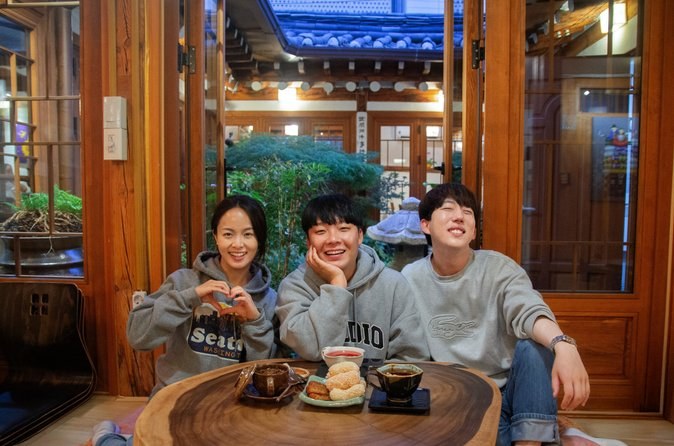
The summer answer: nine hours in a private van with the route agreed on the day, so a wet afternoon becomes a covered one.
From $240 per person
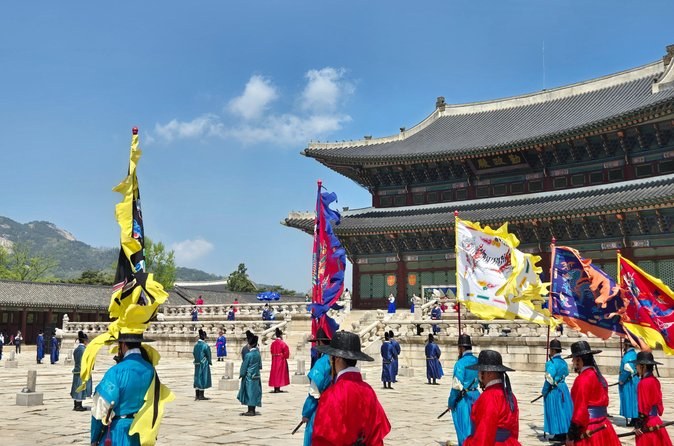
The spring and autumn answer: four stops across seven to eight hours with entry fees paid, in the months when the light lasts.
From $240 per person
Once the season is settled, the month-by-month page has the detail and the timing rules turn your gap into usable hours. Every departure is on Seoul Layover Tours.