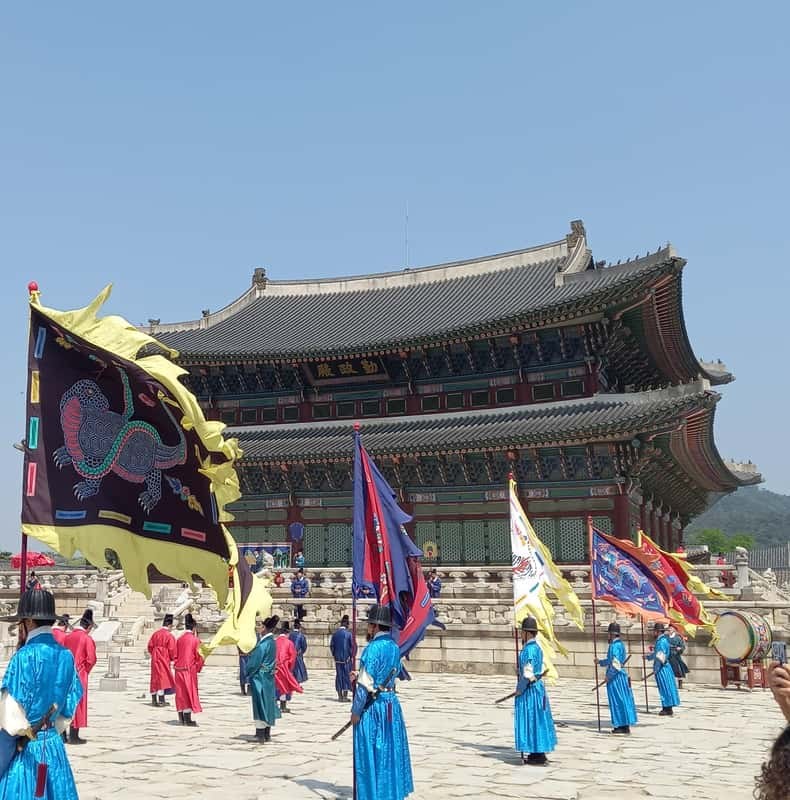
Seoul Layover Tour: Seoul Highlights with ICN Airport Pick-up
Airport pickupAdmission includedBy train
Charged once for the whole party at $254, which is the cheapest option here for anyone travelling as three or more.
From $254 per group
The published fares span $65.34 to $444.78, and comparing those two numbers directly would be meaningless. One is a per-person seat on a shared island excursion; the other is a private car for up to six people for nine hours.
Sorted by what a single traveller would pay for a guided day starting at Incheon, the range narrows sharply: $185 to $254. That is the real market, and the spread inside it is smaller than the listing pages suggest.
Two of these fares are charged once for the whole party. Everything else is per head. That single distinction reorders the price list depending on how many of you are travelling.
| Party size | Rail tour (per group, $254) | Local host (per person, $185) | Most-reviewed day (per person, $240) |
|---|---|---|---|
| 1 | $254 | $185 | $240 |
| 2 | $127 each | $185 each | $240 each |
| 3 | $85 each | $185 each | $240 each |
| 4 | $64 each | $185 each | $240 each |
| 6 | $42 each | $185 each | $240 each |
The crossover is between one and two travellers. A solo traveller pays least on a per-person fare; a pair already pays less on the group one; a family of four pays roughly a third as much. If you are travelling with anyone at all, check the group-priced options first.
That last one is worth more than its face value. Gyeongbokgung is KRW 3,000, which is small — but having it paid removes a queue and a decision at the gate on a day measured in minutes.
Lunch, on almost every listing. This reads like a gap and behaves like a freedom: at Gwangjang Market a full plate of street food costs a few thousand won and takes twenty minutes standing up.
Gratuity, on most. Listed as excluded because it is optional. Tipping is not expected in Korea, including on these tours.
Admission, on two. The Incheon cruise excursion excludes it outright. One nine-hour private day covers every entrance except the N Seoul Tower cable car, at eleven dollars a head.
Two, both stated on their own listings, and both on the same operator's cruise products. An Incheon Airport drop-off instead of a return to the port carries KRW 50,000. Running past nine hours costs KRW 40,000 an hour.
Neither is hidden and neither applies to the airport tours. Read the exclusions block on any listing before you book — that is where an operator states these things, and all of them do.
| Approach | Cost for one | Cost for four | What you are buying |
|---|---|---|---|
| Airport transit tour | Free | Free | A fixed route on a fixed slot |
| Airport Railroad and your own feet | Two train fares | Eight train fares | Transport only |
| Rail tour, per group | $254 | $64 each | Guide, fares, and palace entry |
| Private local host, per person | $185 | $185 each | Six stops, door to door |
| Most-reviewed private day, per person | $240 | $240 each | Four stops, entry and transfers paid |
| Small-group city day, per person | $68 | $68 each | Two palaces — but hotel pickup only |
The bottom row is the cheapest guided day by a wide margin, and it is unusable from the airport. That is the single most important line in this table.
Because it is collected by mini-bus from a hotel in central Seoul, not from Incheon. At $68 a head with over 1,700 reviews it looks like the obvious pick, and a passenger landing at the airport simply cannot take it.
It becomes available the moment your stopover includes a night, which is one of the better arguments for taking a hotel on a long connection. The long-layover page does that arithmetic.
One thing, and it is worth more than its cost. Palace admission is KRW 3,000 — trivial money, and precisely the sort of small friction that derails a tight day.
Having it paid means no ticket window, no queue behind a coach party, no working out which of three counters sells the foreign-adult ticket, and no decision at the gate about whether it is worth going in at all. On a day where you have ninety minutes at one building, removing four minutes of transaction and a possible queue is not nothing.
The same logic runs through the rest of what these fares cover: parking, tolls, the train fares, the fuel. Individually all small. Collectively they are every point in the day where you would otherwise stop, think and pay — which is the actual product on a connection.
Not reliably. The $240 day and the $185 day cover comparable ground with comparable ratings, and the $185 one reaches six stops against four. What the higher fare buys here is review volume — more travellers have made that exact run, and the meeting instructions have been tested more often.
The $445 fare is the outlier and it is not expensive: it is a private car for up to six people for up to nine hours, which is about $75 each at capacity. Read every fare against its basis before calling it dear.
Because the same operator sells the same day on two platforms, and the platforms price independently. One private host's day appears at $185 on one and $199 on the other, for what reads as an identical product with the same operator name attached.
That is not a trick and it is not unusual; commission structures differ between platforms and operators set each listing separately. It does mean that comparing two listings by price alone can have you paying $14 a head more for the same guide. Check the operator name and the stop list, not just the fare.
More than it looks like. Every tour here refunds in full if you cancel more than 24 hours before the start, and two let you reserve now and pay nothing until later.
On a normal holiday that is boilerplate. On a layover it is the mechanism that makes booking early rational: connections move, aircraft swap terminals, and inbounds run late. Booking three weeks out and holding the date costs you nothing, and it is the only way to get a named guide on a popular route — one listing here is booked an average of 53 days ahead.
What it does not cover is a cancellation inside the 24-hour window. If your connection is genuinely uncertain, book anyway and diarise the deadline.
Below about eight hours of connection. At that length there is time for one stop, a fixed free tour does one stop perfectly well, and you are paying $185 for flexibility you have no hours to spend.
Above nine hours the calculation flips, because the value is in the ordering and the return timing rather than in the transport.
One, and it is not money. Doing a Seoul layover alone costs a few train fares and KRW 3,000 at the palace gate — genuinely almost nothing. What it costs is attention.
You are watching a clock in a city you do not know, converting a currency, working out whether the metro line you want runs from this station or the next one, and deciding at every stop whether you still have time for the following one. That is fine on a holiday. On a nine-hour connection with a flight at the end of it, several travellers describe it as the reason they booked a guide the second time.
Set against $185 a head, that is a real trade rather than an obvious one. A solo traveller who has done it before should probably take the train. A family of four on a first visit to Korea is paying about $64 each on the group-priced tour to have someone else hold all of that — which is a different proposition entirely.
Worth spelling out, because "from $65" is the number that draws a click and it belongs to a shore excursion sailing from Jeju rather than to anything a layover passenger can use.
Among the tours that start at an Incheon terminal, the floor is $185 per person or $254 for a whole group. Below that there are exactly two things: the airport's own free transit tour, which is genuinely free and genuinely good on a short connection, and doing it yourself on the Airport Railroad for a few train fares plus KRW 3,000 at the palace gate.
There is no cheap guided middle ground on this route, and any listing that appears to offer one is either starting somewhere you will not be or sailing from a city you are not in. Read the departure point before the fare, every time.
Charged once for the whole party at $254, which is the cheapest option here for anyone travelling as three or more.
From $254 per group
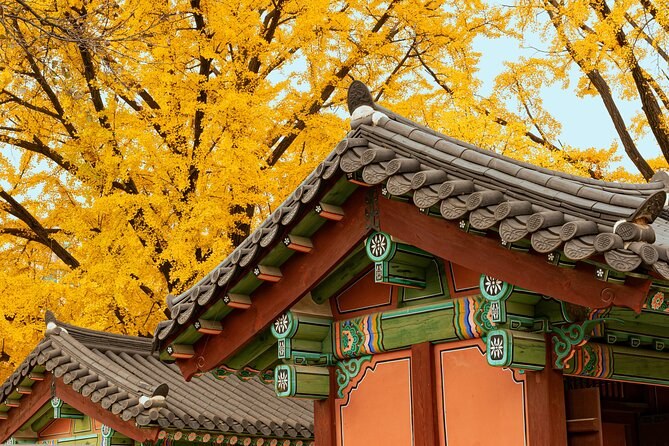
The lowest per-person private fare at $185, reaching six stops with palace admission and parking inside it.
From $185 per person
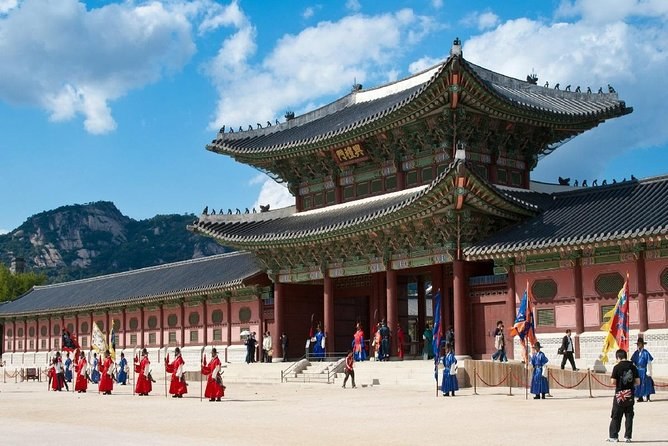
The cheapest guided day at $68 a head — available only if your stopover includes a night in the city.
From $68 per person
Work out which fare basis suits your party, then check your usable hours on the timing rules page. Every fare is listed on Seoul Layover Tours.